
Heavy Metal removal
|
Simple treatment method even in the presence of metal complexes
Efficient and metals removed to low levels Good settlement of solids Stable sludge produced with low leachability of metals |
ADVANTAGES OVER SULPHIDE OR HYDROXIDE PRECIPITATION
|
Metals removed to low concentrations typically <0.1mg/l
Metals can be removed even in the presence of complexes Metal removal unaffected by the presence of cleaners Metals can be removed across a broad range of pH Metals precipitated remain insoluble even if pH changes |
|
applications
Plating industry
Metal finishing
Printed circuit board manufacture
Aerospace
Automotive
Battery manufacture
Incineration plant
Thermal power plant
Waste disposal contractors
Polluted groundwater
Washing contaminated land/soil
Iron and steel manufacture
Photographic industry
Printing industry
Chemical industry
Electronics industry
Metal finishing
Printed circuit board manufacture
Aerospace
Automotive
Battery manufacture
Incineration plant
Thermal power plant
Waste disposal contractors
Polluted groundwater
Washing contaminated land/soil
Iron and steel manufacture
Photographic industry
Printing industry
Chemical industry
Electronics industry
sulphates
Sulphates can only be precipitated at ambient temperature to between 1500-1800mg/l and in the presence of sodium and potassium ions this is higher and often the limit of solubility is around 2500mg/l.
Water authorities want the sulphate level to be reduced to between 1000-1800mg/l this is so sulphate rich effluents don’t damage the sewer infrastructure.
A novel chemical precipitation method has been developed using the addition of aluminium and calcium. The chemical reaction is accelerated using ultrasound and its efficiency is improved.
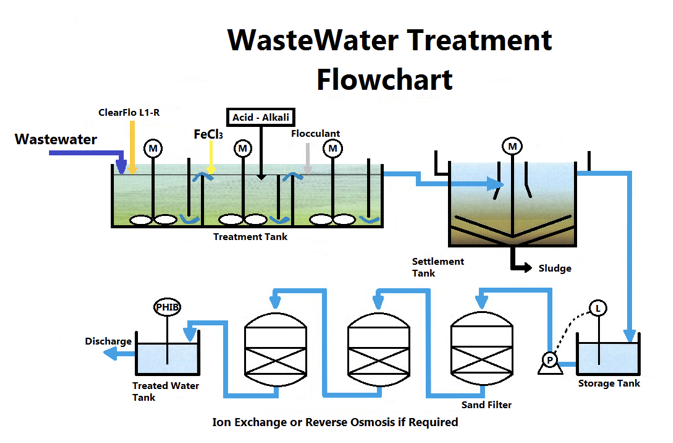
The settlement and precipitation of the solid is aided by the addition of Clearflo L1-R .
Water authorities want the sulphate level to be reduced to between 1000-1800mg/l this is so sulphate rich effluents don’t damage the sewer infrastructure.
A novel chemical precipitation method has been developed using the addition of aluminium and calcium. The chemical reaction is accelerated using ultrasound and its efficiency is improved.
The settlement and precipitation of the solid is aided by the addition of Clearflo L1-R .
